- March 19, 2026
On the occasion of International Women’s Day 2026, ADRRN conducted a rapid survey among its members and partners to explore how organisations are contributing to gender equality and what forms of regional support are needed to strengthen Gender Equality, Disability and Social Inclusion (GEDSI) across humanitarian and disaster risk reduction efforts.
A total of 31 respondents from ADRRN member and partner organisations participated in the survey. Participants represented the geographic contexts in which ADRRN operates, reflecting a range of humanitarian and disaster risk reduction experiences.
Objectives of the Survey
- Identify one commitment organisations are willing to “give” to advance gender equality within humanitarian and disaster risk reduction initiatives.
- Understand the types of regional support needed to strengthen gender equality, disability inclusion, and women’s leadership.
- Generate insights that can inform future collaboration, learning initiatives, and advocacy efforts within the ADRRN network.
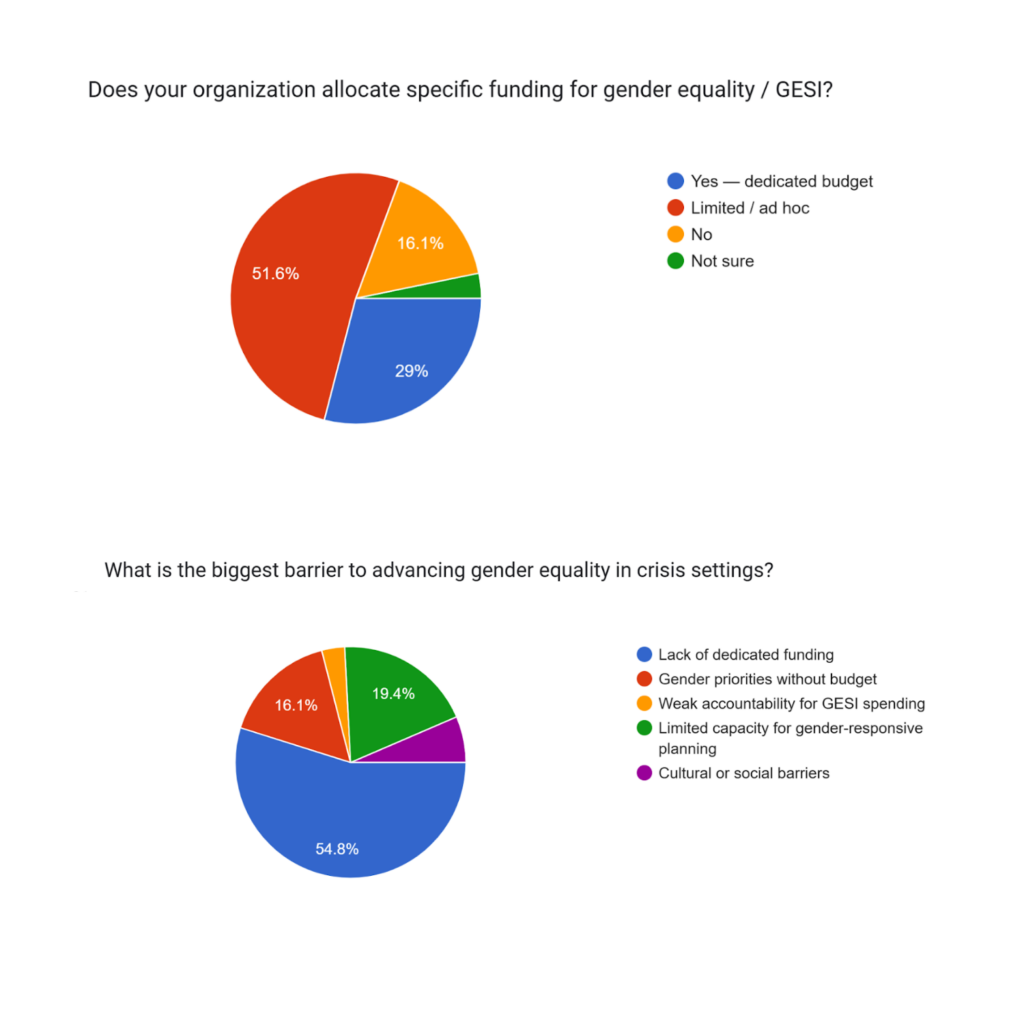
Top commitments identified:
- Capacity building and knowledge sharing
- Strengthening women’s leadership in disaster governance
- Gender-responsive and protection-focused programming
Top support needs identified:
- Regional learning platforms and technical guidance
- Flexible funding for women-led and grassroots organisations
- Stronger regional partnerships and collaboration
Main Findings and Analysis
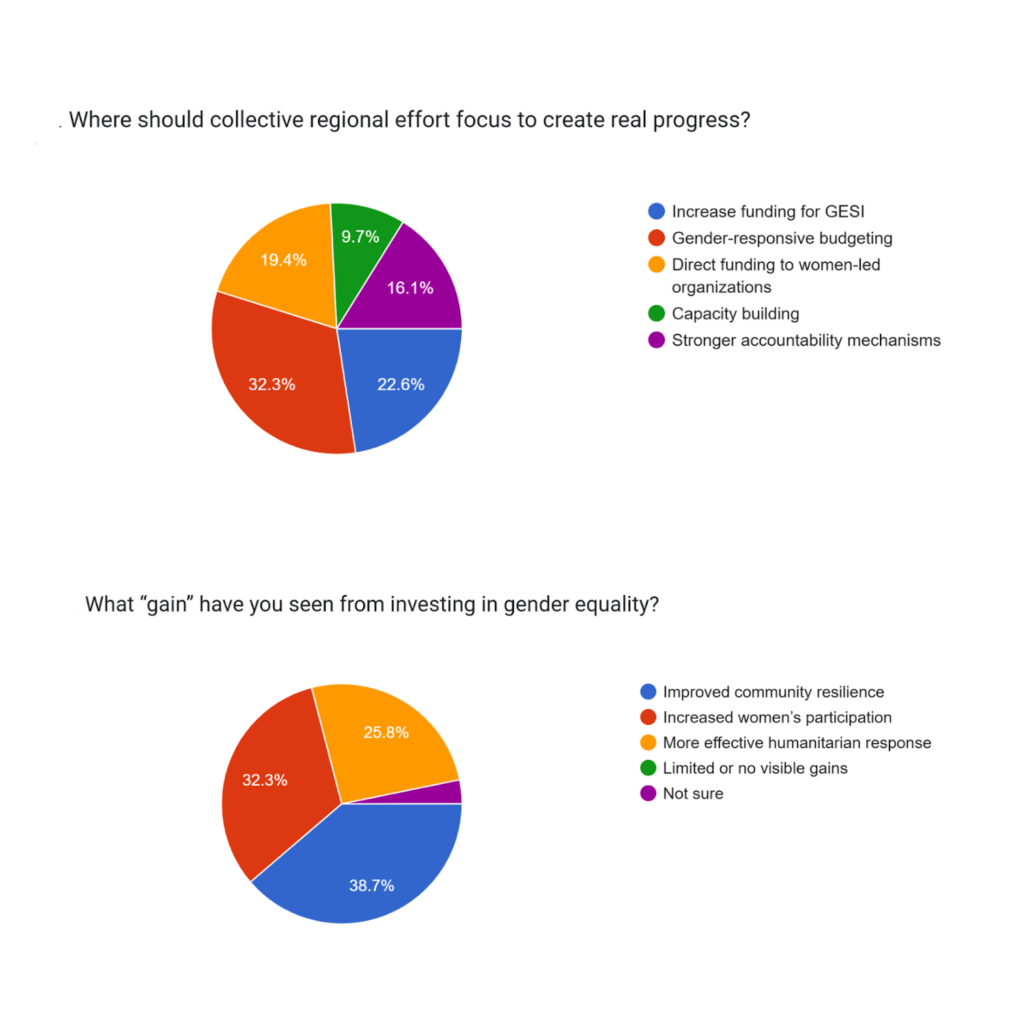
Survey responses reveal a strong commitment among organisations to advance gender equality through capacity building, leadership development, and gender-responsive programming.
The most frequently cited commitment relates to capacity strengthening and knowledge sharing. Many respondents expressed their willingness to contribute by providing training, workshops, mentorship programmes, and technical guidance on gender equality, disaster risk reduction, and GEDSI integration. Respondents highlighted the importance of equipping community organizations, humanitarian practitioners, and local leaders with practical tools and knowledge to integrate gender and inclusion into programme planning and implementation. This emphasis reflects a growing recognition that sustainable progress on gender equality requires strong institutional and community capacities.
Another key theme emerging from the responses is the need to expand women’s leadership and participation in disaster governance. Many organisations are committed to promoting women’s representation in community disaster management committees, supporting women-led and disability-led organisations, and creating opportunities for women to take on leadership and technical roles in sectors such as climate resilience, water management, and disaster response. Some respondents also suggested mentorship programmes, leadership quotas, and vocational training initiatives as practical strategies to strengthen women’s participation in decision-making processes.
The responses also highlight increasing attention to gender-responsive and protection-focused programming. Several organisations emphasised integrating gender analysis into project design, strengthening safeguarding mechanisms, promoting gender-responsive budgeting, and establishing protection systems such as Gender-Based Violence (GBV) referral services and Protection from Sexual Exploitation and Abuse (PSEA) mechanisms. These commitments demonstrate growing awareness that gender equality must be integrated systematically across the programme cycle—from planning and implementation to monitoring and accountability.
In addition to organisational commitments, respondents also identified key regional support needs. The most prominent need is for technical guidance and knowledge exchange platforms that allow organizations to share tools, experiences, and lessons learned on GEDSI integration. Respondents also emphasized the need for flexible and sustainable funding, particularly for women-led and grassroots organisations that often face barriers in accessing resources despite their critical role in strengthening community resilience. Finally, participants highlighted the importance of stronger regional partnerships and networking opportunities that enable organisations to collaborate, share good practices, and advocate collectively for gender-responsive disaster policies.
Moving forward, ADRRN can continue to play an important role in facilitating regional learning platforms, strengthening partnerships across member organizations, and supporting initiatives that promote women’s leadership and GEDSI integration in disaster governance.
By fostering collaboration, knowledge exchange, and investment in inclusive approaches, the ADRRN network and its partners can contribute to building more resilient, equitable, and inclusive communities across the Asia-Pacific region.